
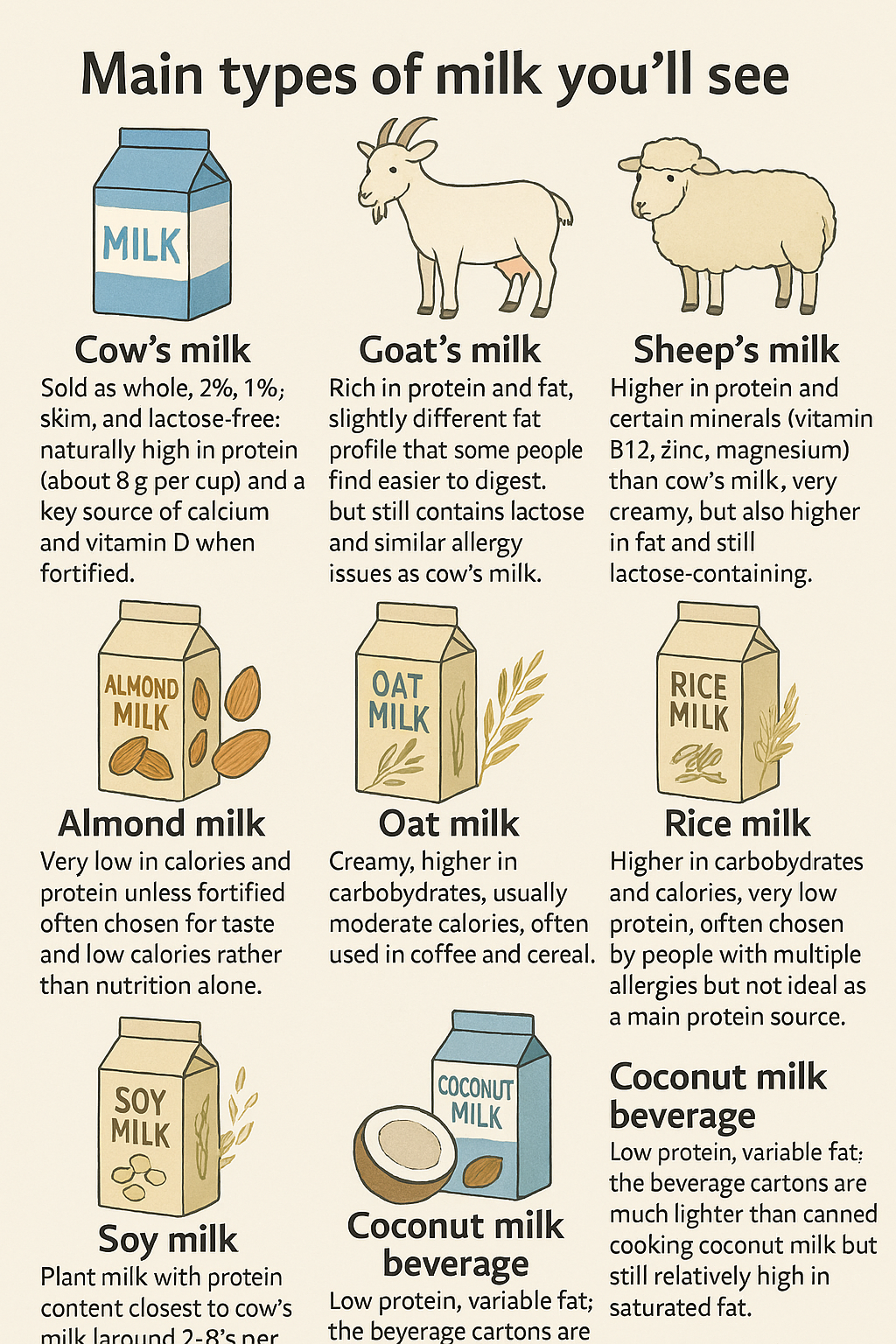
Main types of milk you’ll see
- Cow’s milk: Sold as whole, 2%, 1%, skim, and lactose‑free; naturally high in protein (about 8 g per cup) and a key source of calcium and vitamin D when fortified.
- Goat’s milk: Rich in protein and fat, slightly different fat profile that some people find easier to digest, but still contains lactose and similar allergy issues as cow’s milk.
- Sheep’s milk: Higher in protein and certain minerals (vitamin B12, zinc, magnesium) than cow’s milk, very creamy, but also higher in fat and still lactose‑containing.
- Almond milk: Very low in calories and protein unless fortified; often chosen for taste and low calories rather than nutrition alone.
- Oat milk: Creamy, higher in carbohydrates, usually moderate calories; often used in coffee and cereal.
- Soy milk: Plant milk with protein content closest to cow’s milk (around 7–8 g per cup when unsweetened), commonly fortified with calcium and vitamins.
- Rice milk: Higher in carbohydrates and calories, very low protein, often chosen by people with multiple allergies but not ideal as a main protein source.
- Coconut milk beverage: Low protein, variable fat; the beverage cartons are much lighter than canned cooking coconut milk but still relatively high in saturated fat.
Pros, cons, and typical costs
Animal milks (cow, goat, sheep)
Cow’s milk
- Advantages:
- High‑quality protein and naturally rich in calcium; usually fortified with vitamin D and A, which support bones and immunity.
- Widely available, inexpensive, and comes in many fat levels (whole to skim), including lactose‑free versions. Average U.S. retail prices are often around 3–4 USD per gallon for regular 2% milk, making it cheaper per cup than plant milks.
- Disadvantages:
Goat’s milk
- Advantages:
- Disadvantages:
Sheep’s milk
- Advantages:
- Disadvantages:
Plant milks (almond, oat, soy, rice, coconut)
Almond milk
- Advantages:
- Disadvantages:
Oat milk
- Advantages:
- Disadvantages:
Soy milk
- Advantages:
- Disadvantages:
- Some people dislike the flavor or are concerned about soy intake, although moderate amounts are considered safe in general populations.
- Soy allergy is possible, especially in children.
Rice milk
- Advantages:
- Disadvantages:
Coconut milk beverage
- Advantages:
- Disadvantages:
Cost snapshot in U.S. stores
- Cow’s milk: Around 3–4 USD per gallon (3.8 L) at many supermarkets.
- Almond and soy milk: Roughly 3.50–4.30 USD per half‑gallon (1.9 L) in many chains.
- Oat milk: Often 4.50–5.00 USD per half‑gallon, making it one of the pricier everyday options.
This means most plant milks cost about 2–3 times more per cup than standard cow’s milk, with almond sometimes the least expensive and oat among the most expensive.
Who should drink what, and when?
Babies (0–12 months)
- Breast milk or infant formula should be the main milk; cow’s milk or plant milks are not appropriate as main drinks in this period.
- Plant‑based beverages (almond, oat, rice, etc.) are considered nutritionally inadequate as a primary milk for infants.
Toddlers and young children (1–5 years)
- Cow’s milk: Most guidelines recommend whole cow’s milk from 12–24 months, about two 8‑ounce cups per day, then switching to low‑fat or skim after age 2 if growth is normal.
- Plant milks: Expert groups state that plant drinks that are not nutritionally equivalent to cow’s milk should not be the main drink before age 2–3, unless medically indicated and carefully chosen (fortified, adequate protein).
- Rice milk is specifically discouraged as the main drink in young children because of arsenic concerns and low protein.
Older children, teens, and adults
- Healthy, non‑allergic people: Cow’s milk or fortified soy milk often give the best protein and calcium per cup, with portion control for calories and fat.
- Lactose intolerance: Lactose‑free cow’s milk or plant milks (soy, almond, oat, etc.) are good options; soy offers the most protein.
- Dairy allergy: Plant milks are preferred; choose fortified soy or pea milk for better protein, and avoid nut milks if there is nut allergy.
- Weight management: Unsweetened almond milk (very low calorie) or skim cow’s milk can help cut calories while still contributing to calcium and protein (for cow’s milk).
- Heart health: Lower‑fat dairy (1% or skim) or plant milks with minimal saturated fat (soy, almond, many oat milks) may be preferable to whole dairy or high‑fat coconut beverages.
Older adults
- Bone health: Adequate calcium and vitamin D are critical; both cow’s milk and fortified plant milks can help.
- Protein: Cow’s milk or higher‑protein plant milks (soy, pea) support muscle mass better than low‑protein drinks like almond or rice milk.
Practical recommendations by age
These are general suggestions for otherwise healthy people; specific conditions (kidney disease, severe allergies, diabetes, etc.) need individualized advice.
- 0–12 months: Breast milk or infant formula as primary milk; avoid regular cow’s milk and plant milks as the main drink.
- 1–2 years: Whole cow’s milk (about 2 cups per day) if tolerated; avoid using low‑protein plant milks as the main drink, except under medical supervision with fortified, higher‑protein choices.
- 2–5 years: Switch to low‑fat or skim cow’s milk if growth and weight are on track; fortified soy milk can substitute when dairy is not tolerated.
- 6–18 years: Cow’s milk or fortified soy/pea milk for protein and calcium; occasional use of almond or oat milk is fine but they should not replace all higher‑protein options.
- Adults: Choose based on goals—cow’s or soy/pea milk for protein; almond or oat for taste or lower lactose; limit sweetened varieties if managing blood sugar or weight.
- Older adults: Prioritize protein and calcium; 2–3 servings per day of cow’s milk, yogurt, or fortified soy/pea milk can support bone and muscle health.
In practice, many families keep one main high‑protein milk (cow’s, lactose‑free cow’s, or soy) for everyday use, and one extra type (almond or oat) for taste variety, coffee, or specific recipes.