
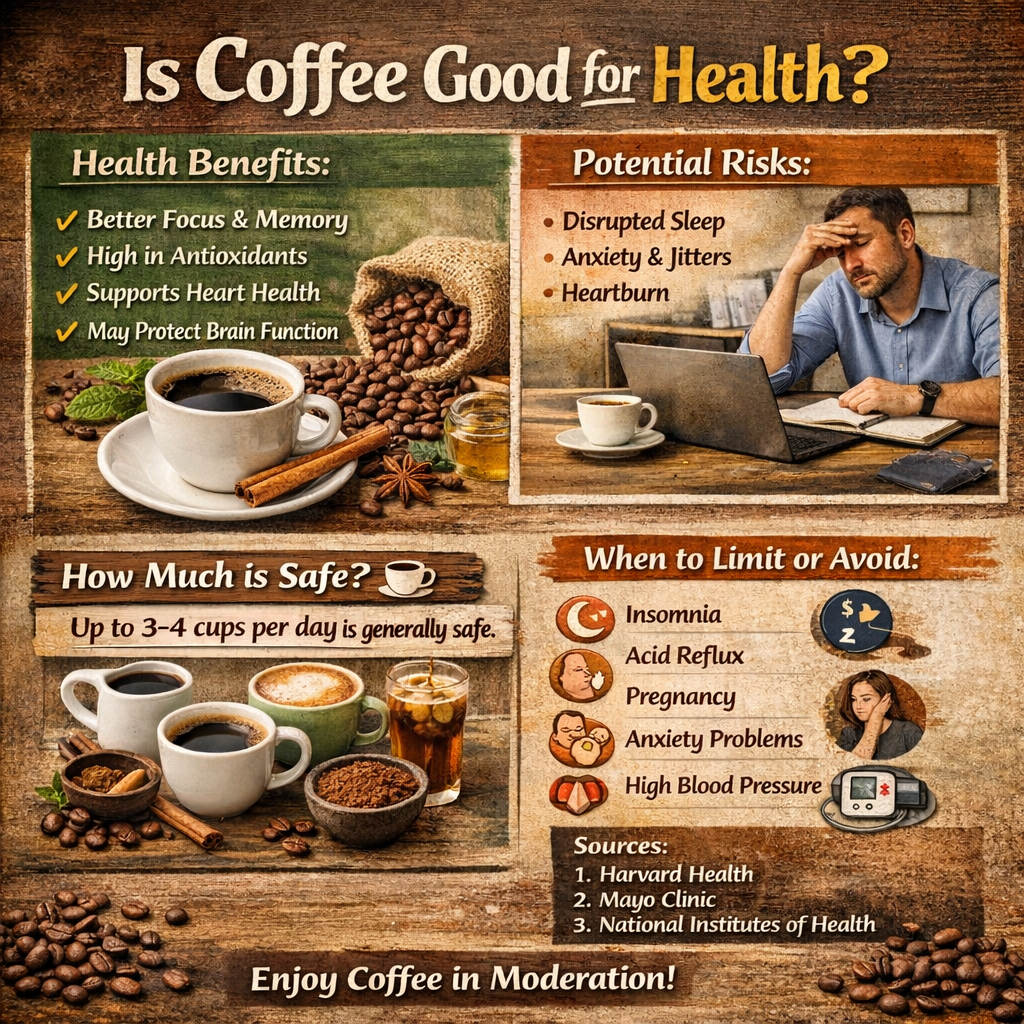
Coffee is one of the most widely consumed beverages in the world. For many people, it’s part of a daily ritual—morning energy, focus at work, or a social habit. Over the years, coffee has been both praised and criticized. Modern research now shows that coffee can offer real health benefits when consumed correctly, but it’s not suitable for everyone and can cause problems if overused.
Let’s explore whether coffee is good for health, how it helps, what issues it may cause, how much is safe, and how age and lifestyle affect coffee intake.
How Coffee Helps Your Health
Coffee is more than just caffeine. It contains hundreds of bioactive compounds that affect the body in multiple ways.
1. Improves Mental Alertness and Focus
Caffeine stimulates the central nervous system by blocking adenosine, a chemical that promotes sleepiness. This leads to improved alertness, concentration, reaction time, and short-term memory.
Benefit:
- Better focus and productivity
- Reduced mental fatigue
2. Rich in Antioxidants
Coffee is one of the largest sources of antioxidants in the modern diet. These antioxidants help fight oxidative stress, which contributes to aging and chronic diseases.
Benefit:
- Reduces inflammation
- Protects cells from damage
3. Supports Heart and Metabolic Health (in Moderation)
Multiple studies suggest that moderate coffee intake is linked with a lower risk of:
- Type 2 diabetes
- Stroke
- Certain heart diseases
Coffee may help improve insulin sensitivity and support blood vessel function when consumed in moderate amounts.
4. May Protect Brain Health
Long-term coffee consumption has been associated with a reduced risk of neurodegenerative diseases such as:
- Alzheimer’s disease
- Parkinson’s disease
This is likely due to caffeine’s effects on brain signaling and inflammation.
5. Enhances Physical Performance
Caffeine increases adrenaline levels and helps release fatty acids from fat tissues, improving physical performance and endurance.
Benefit:
- Improved workout performance
- Increased fat burning during exercise
Potential Health Issues Caused by Coffee
While coffee has benefits, excessive or poorly timed consumption can cause problems.
1. Anxiety and Jitters
Too much caffeine can overstimulate the nervous system.
Symptoms may include:
- Nervousness
- Rapid heartbeat
- Shakiness
- Restlessness
2. Sleep Disruption
Caffeine can stay in the body for 6–8 hours (or longer in some people). Drinking coffee late in the day may lead to:
- Difficulty falling asleep
- Poor sleep quality
3. Digestive Issues
Coffee increases stomach acid production, which may worsen:
- Acid reflux
- Gastritis
- Stomach irritation
4. Blood Pressure Spikes (Temporary)
Caffeine can temporarily raise blood pressure, especially in people who are sensitive to it or not regular coffee drinkers.
5. Dependence and Withdrawal
Regular high intake may lead to caffeine dependence. Sudden withdrawal can cause:
- Headaches
- Fatigue
- Irritability
What Kind of Coffee Is Healthiest?
Not all coffee is equal. Preparation and additives matter.
Best Choices:
- Black coffee (filtered)
- Cold brew (lower acidity)
- Organic coffee (lower pesticide exposure)
Coffee Types to Limit:
- Sugary flavored coffees
- Coffee with artificial syrups
- Whipped cream-loaded beverages
Filtered coffee is generally better than unfiltered (like French press) because it removes compounds that can raise cholesterol.
Is It Good to Add Anything to Coffee?
Yes—some additions can enhance benefits, while others reduce them.
Better Additions:
- Milk or plant milk (unsweetened) – Adds calcium and protein
- Cinnamon – Helps blood sugar control
- Cocoa powder (unsweetened) – Adds antioxidants
Additions to Avoid:
- Excess sugar
- Artificial sweeteners (in large amounts)
- Heavy cream (frequent use may increase calorie intake)
How Much Coffee Is Safe?
Most health authorities agree:
Safe limit for healthy adults:
➡️ Up to 3–4 cups per day
➡️ Roughly 300–400 mg of caffeine
Exceeding this regularly may increase side effects without added benefits.
When Should You Avoid or Limit Coffee?
Coffee should be limited or avoided if you:
- Have severe anxiety or panic disorders
- Have acid reflux or stomach ulcers
- Are pregnant (limit to ~200 mg/day)
- Have uncontrolled high blood pressure
- Experience sleep disorders
People who feel jittery after small amounts may be caffeine-sensitive and should reduce intake.
Should Coffee Intake Differ by Age and Weight?
Age Matters:
- Under 18: Caffeine should be limited
- Adults 40+: Moderate coffee may help brain and heart health
- Older adults: Slower caffeine metabolism means late-day coffee can disrupt sleep
Weight and Metabolism:
- Smaller body size = stronger caffeine effects
- People with slower metabolism may need lower amounts
There is no exact formula, but personal tolerance matters more than body weight alone.
Signs You May Be Drinking Too Much Coffee
- Difficulty sleeping
- Frequent anxiety or palpitations
- Headaches when skipping coffee
- Digestive discomfort
- Energy crashes
If these occur, reducing intake often improves symptoms within days.
Top Medical References
- Harvard T.H. Chan School of Public Health – Coffee and Health
- Mayo Clinic – Caffeine: How much is too much?
- National Institutes of Health (NIH) – Caffeine and human health