
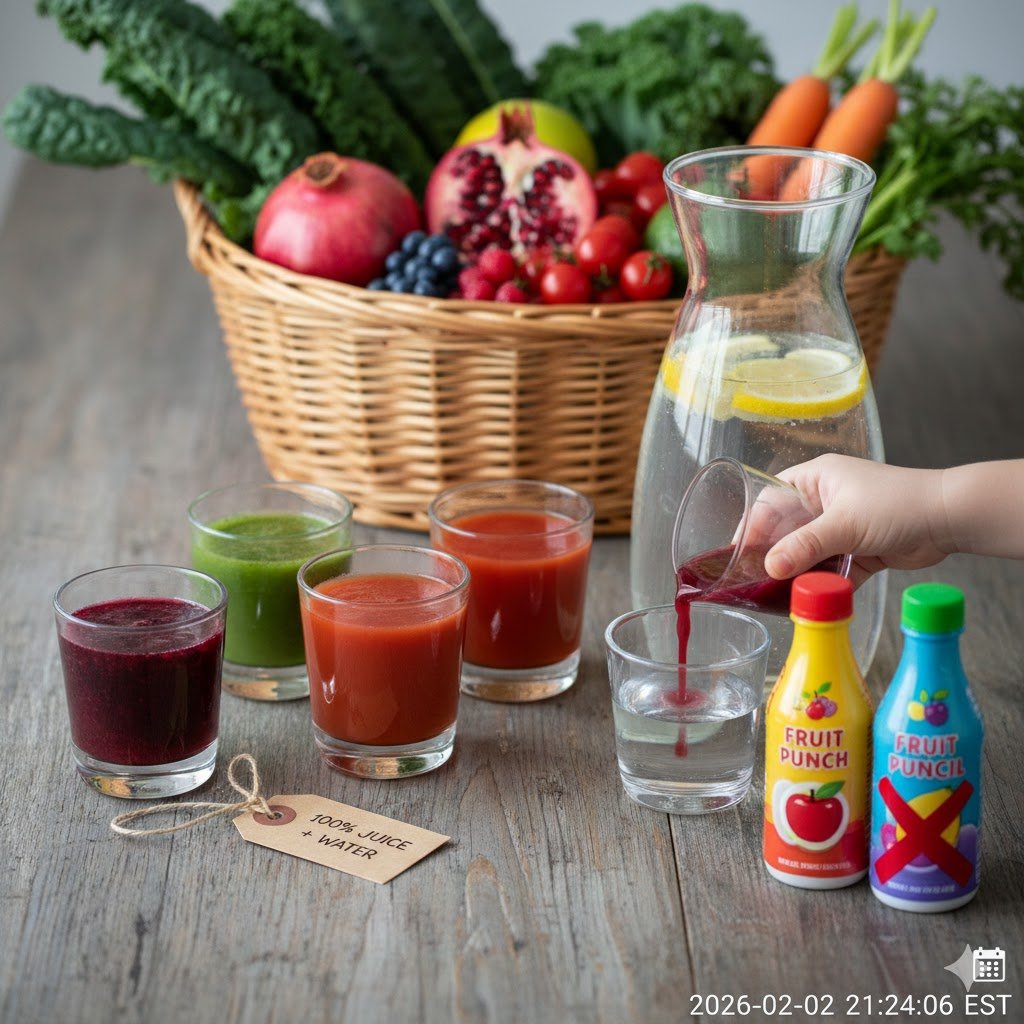
Ages 1–5: Tiny tummies, gentle juices
For toddlers and preschoolers, the main drink should still be water and milk; juice is only a small extra. Health organizations recommend limiting 100% juice to a few ounces per day and not using it as a replacement for whole fruit because juice lacks fiber and is easy to overconsume.
Best choices (in small amounts):
- Diluted 100% apple, pear, or orange juice (half juice, half water) to reduce sugar load while still providing vitamin C and some potassium.
- Mild vegetable–fruit blends (carrot‑apple, cucumber‑melon) for extra vitamins with less sugar than pure fruit juice.
Advantages:
- Helps picky eaters get some vitamin C, A, and antioxidants, and can make it easier to reach daily fruit/veg servings.
- Hydrating and often more appealing than plain water during illness or hot weather.
Disadvantages and what to avoid:
- Too much juice is linked to excess calorie intake, tooth decay, and possible diarrhea because of high natural sugar and acidity.
- Avoid: juice “drinks,” punches, and sodas with added sugar or corn syrup, as these provide calories without nutrients and increase risk of obesity and dental cavities.
- Avoid: giving juice in a bottle or sippy cup all day; constant sipping bathes teeth in sugar and acid.
Ages 6–12: Growing bodies, sugar traps
School‑age kids are more independent and more exposed to sweet drinks. Juice can still fit, but limits matter even more. Recommendations typically cap 100% juice at about 4–8 ounces per day, depending on age.
Best choices:
- 100% orange, grape, or berry juice (small glass) for vitamin C and antioxidants; look for cartons labeled “100% juice” with no added sugar.
- Fruit–vegetable mixes like apple‑beet, watermelon‑kale, or tomato‑based blends to add nutrients kids might not get from vegetables.
Advantages:
- Provides antioxidants (especially purple, blue, and red juices like grape, blueberry, or pomegranate) that support immune and cardiovascular health.
- A practical tool to sneak vegetables into the diet when kids refuse them in other forms.
Disadvantages and what to avoid:
- Even 100% juice is high in natural sugar and low in fiber, so it is less filling than whole fruit and can become “empty calories” if portions are large.
- Avoid: sports drinks, energy drinks, and juice cocktails with added sugar and artificial colors; they add sugar, sometimes caffeine, and have no benefit for most kids.
- Avoid: treating juice as a default thirst quencher; water should remain the main drink.
Teens: Energy needs, weight concerns
Teenagers juggle growth, school, and sports, often reaching for sweet drinks for quick energy. Juices that support energy and concentration without flooding the body with sugar are best.
Best choices:
- Green blends (spinach or kale with pineapple, apple, or ginger) for iron, folate, and antioxidants that may support concentration and energy metabolism.
- 100% pomegranate, tart cherry, or grape juice (small servings) for polyphenol antioxidants linked to heart and exercise recovery benefits.
Advantages:
- Nutrient‑dense juices can help fill gaps in teen diets, especially for those who skip breakfast or eat few fruits and vegetables.
- Some juices like tart cherry and pomegranate have anti‑inflammatory and antioxidant properties that may support recovery after sports.
Disadvantages and what to avoid:
- Large servings of juice, smoothies, and sweetened drinks can contribute to weight gain and higher risk of metabolic issues because they are easy to overdrink.
- Avoid: juice blended with ice cream, syrups, or added sugars (common in store‑bought smoothies), which can contain as many calories as a dessert.
- Avoid: using juice as a “study drink” all evening; the sugar spikes can affect energy, mood, and dental health.
Adults 20–50: Metabolism, skin, and heart
For adults, juice is optional rather than essential, but the right choices can complement a varied diet. The focus should be on 100% juice, modest portions, and using juice strategically rather than as a default drink.
Best choices:
- Vegetable‑forward juices (tomato, mixed vegetable, or tomato‑basil blends) for vitamins A and C and lower sugar content compared with pure fruit juices.
- Beetroot juice for nitrates that may help support blood flow and blood pressure; often mixed with apple or carrot for taste.
- Citrus (orange, grapefruit) and berry‑based juices for vitamin C and antioxidants that support immune function and skin health.
Advantages:
- 100% juices can deliver concentrated antioxidants and vitamins (like vitamin C, potassium, and phytonutrients) that support heart, immune, and skin health.
- Vegetable blends provide nutrients with less sugar than pure fruit juice and can help people who struggle to eat enough vegetables.
Disadvantages and what to avoid:
- Because juice lacks fiber, it does not keep you full; regular large servings can add many calories and contribute to weight gain and elevated blood sugar.
- Some vegetable juices are high in sodium; frequent use can undermine blood pressure control. Checking labels for salt is important, especially for tomato and mixed vegetable juices.
- Avoid: “juice drinks,” sweet teas, and flavored waters with added sugar; prioritize labels that say “100% juice” with no added sweeteners.
Age 50+: Heart, digestion, medications
After 50, many people monitor blood pressure, blood sugar, digestion, and medications. Juice choices should support heart and digestive health while keeping sugar and sodium reasonable.
Best choices:
- Pomegranate, cranberry, red grape, prune, and acai berry juices in small servings for antioxidants, potential cardiovascular benefits, and digestive support (especially prune).
- Lower‑sodium vegetable juices (like tomato or mixed veggie with reduced salt) for vitamins A and C, potassium, and hydration with less sugar.
Advantages:
- Antioxidant‑rich juices, especially dark‑colored ones (pomegranate, grape, berry), have been linked with heart‑health benefits and reduced oxidative stress.
- Prune and some vegetable juices can support bowel regularity, which becomes a more common concern with age.
Disadvantages and what to avoid:
- People with diabetes or prediabetes need to be especially cautious with juice, because even 100% fruit juice can spike blood sugar; small, well‑timed portions are essential.
- Certain juices (notably grapefruit) can interact with medications by changing how they are metabolized; anyone on chronic medication should check with a clinician before regular use.
- Avoid: high‑sodium vegetable juices and any juice with added sugar, as these can worsen blood pressure, weight, and metabolic control.
Simple rules: What to have and avoid
Across all ages, a few core rules make juice healthier:
What to have:
- 100% juice in small glasses, often diluted with water, focusing on vegetable‑rich or lower‑sugar options and dark, antioxidant‑rich juices like pomegranate, berry, and tomato.
- Juice as an occasional nutrient booster, not as the main way to consume fruits and vegetables; whole produce should remain the foundation for fiber and satiety.
What to avoid:
- Drinks with added sugar, artificial colors, or flavors labeled “punch,” “cocktail,” or “juice drink,” which add calories without meaningful nutrients.
- Excessive portions at any age; over‑reliance on juice can contribute to weight gain, blood sugar spikes, and dental issues, especially when sipped frequently throughout the day.