
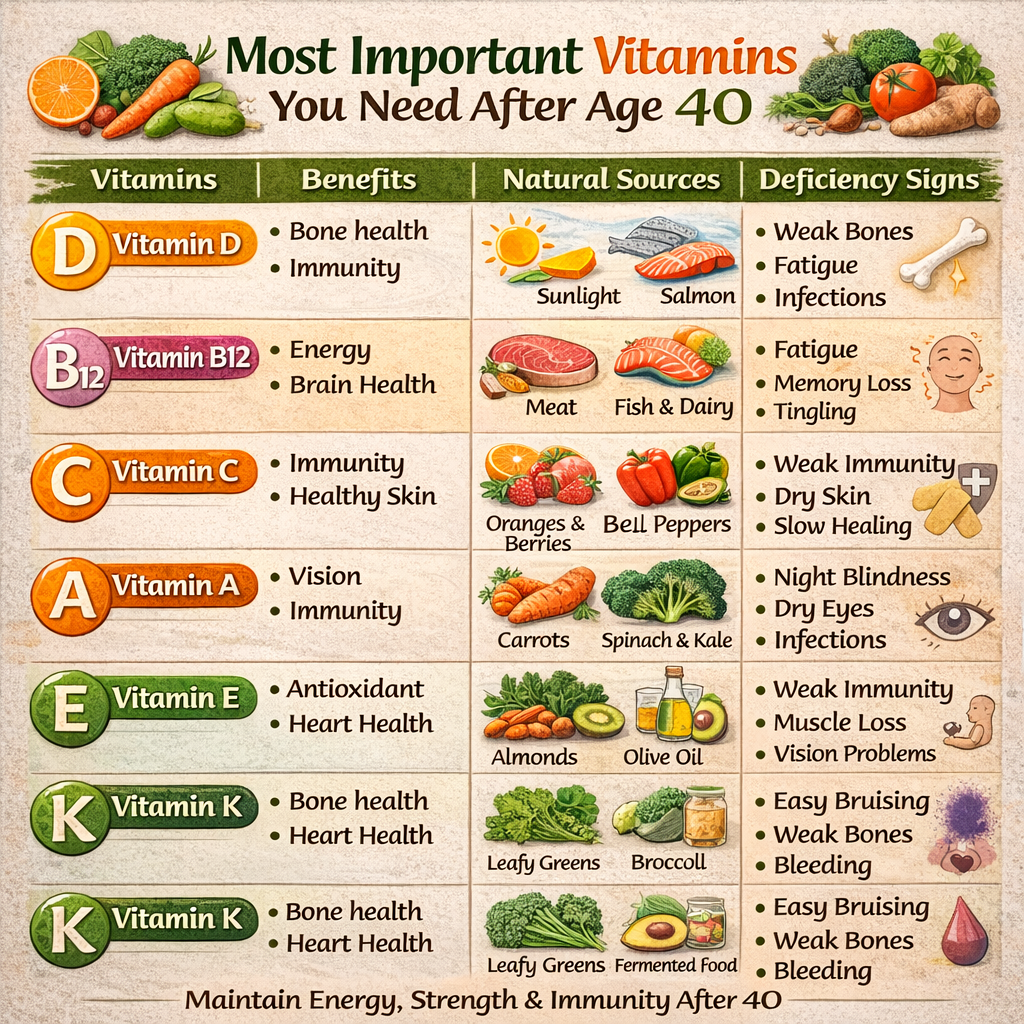
As we cross the age of 40, our bodies begin to change in subtle but important ways. Metabolism slows, nutrient absorption decreases, hormone levels shift, and the risk of chronic health issues increases. Because of these changes, getting the right vitamins becomes more important than ever.
Vitamins play a crucial role in maintaining energy, bone strength, immunity, brain health, heart function, and overall well-being. Unfortunately, many adults over 40 are unknowingly deficient in key nutrients.
Let’s explore the most important vitamins you need after 40, why they matter, their natural food sources, what deficiency can cause, and how to know if you might be lacking them.
1. Vitamin D – The Bone and Immunity Protector
Why Vitamin D Is Important After 40
Vitamin D helps your body absorb calcium, making it essential for maintaining strong bones and preventing osteoporosis. After 40, bone density naturally declines, especially in women. Vitamin D also supports immune function, muscle strength, and mood.
Natural Sources
- Sunlight (15–20 minutes on skin)
- Fatty fish (salmon, tuna, sardines)
- Egg yolks
- Fortified milk and cereals
- Mushrooms exposed to sunlight
Deficiency Can Cause
- Weak bones and fractures
- Bone pain and muscle weakness
- Fatigue
- Increased risk of infections
- Mood changes or depression
How to Know If You’re Deficient
- Frequent bone or joint pain
- Getting sick often
- Low energy levels
- Blood test confirming low vitamin D levels
2. Vitamin B12 – Energy and Brain Support
Why Vitamin B12 Is Important After 40
As we age, stomach acid production decreases, making it harder to absorb vitamin B12 from food. B12 is vital for red blood cell formation, nerve health, brain function, and energy production.
Natural Sources
- Meat and poultry
- Fish and shellfish
- Eggs
- Dairy products
- Fortified plant-based milks and cereals
Deficiency Can Cause
- Chronic fatigue
- Memory problems
- Numbness or tingling in hands and feet
- Anemia
- Mood changes or depression
How to Know If You’re Deficient
- Persistent tiredness despite rest
- Brain fog or forgetfulness
- Tingling sensations
- Blood test for B12 levels
3. Vitamin C – Immunity and Skin Health
Why Vitamin C Is Important After 40
Vitamin C is a powerful antioxidant that supports immune health, collagen production, wound healing, and skin elasticity. After 40, collagen production drops, making vitamin C especially important for skin and joint health.
Natural Sources
- Oranges, lemons, grapefruit
- Strawberries
- Kiwi
- Bell peppers
- Broccoli and tomatoes
Deficiency Can Cause
- Weak immunity
- Slow wound healing
- Dry, aging skin
- Bleeding gums
- Frequent colds
How to Know If You’re Deficient
- Frequent infections
- Poor skin healing
- Gum problems
- Blood tests (rare but possible)
4. Vitamin A – Vision and Immune Health
Why Vitamin A Is Important After 40
Vitamin A supports vision, immune response, and skin health. As eyesight naturally declines with age, this vitamin plays a key role in maintaining eye function.
Natural Sources
- Carrots
- Sweet potatoes
- Spinach and kale
- Liver
- Dairy products
Deficiency Can Cause
- Night blindness
- Dry eyes
- Increased infection risk
- Dry skin
How to Know If You’re Deficient
- Trouble seeing in low light
- Dry eyes or skin
- Frequent infections
- Medical evaluation if symptoms persist
5. Vitamin E – Antioxidant and Heart Support
Why Vitamin E Is Important After 40
Vitamin E protects cells from oxidative damage, supports heart health, and helps maintain healthy skin. Antioxidants become increasingly important with age to fight inflammation and cellular aging.
Natural Sources
- Almonds and sunflower seeds
- Spinach
- Avocados
- Olive oil
- Hazelnuts
Deficiency Can Cause
- Muscle weakness
- Nerve damage
- Vision problems
- Weakened immunity
How to Know If You’re Deficient
- Muscle coordination issues
- Vision disturbances
- Diagnosed through blood testing (rare but possible)
6. Vitamin K – Bone and Heart Health
Why Vitamin K Is Important After 40
Vitamin K helps with blood clotting and works with vitamin D to maintain strong bones. It also supports cardiovascular health by preventing calcium buildup in arteries.
Natural Sources
- Leafy greens (kale, spinach, broccoli)
- Brussels sprouts
- Green beans
- Fermented foods like natto
Deficiency Can Cause
- Easy bruising
- Excessive bleeding
- Weak bones
- Increased fracture risk
How to Know If You’re Deficient
- Frequent bruising
- Slow blood clotting
- Medical tests if bleeding issues occur
How to Know If You’re Vitamin Deficient Overall
Common signs of vitamin deficiencies after 40 include:
- Constant fatigue
- Weak immunity
- Bone or joint pain
- Hair thinning or dry skin
- Poor concentration
- Mood changes
The most accurate way to identify deficiencies is through blood tests ordered by a healthcare provider. Symptoms can overlap, so testing is essential before starting supplements.