
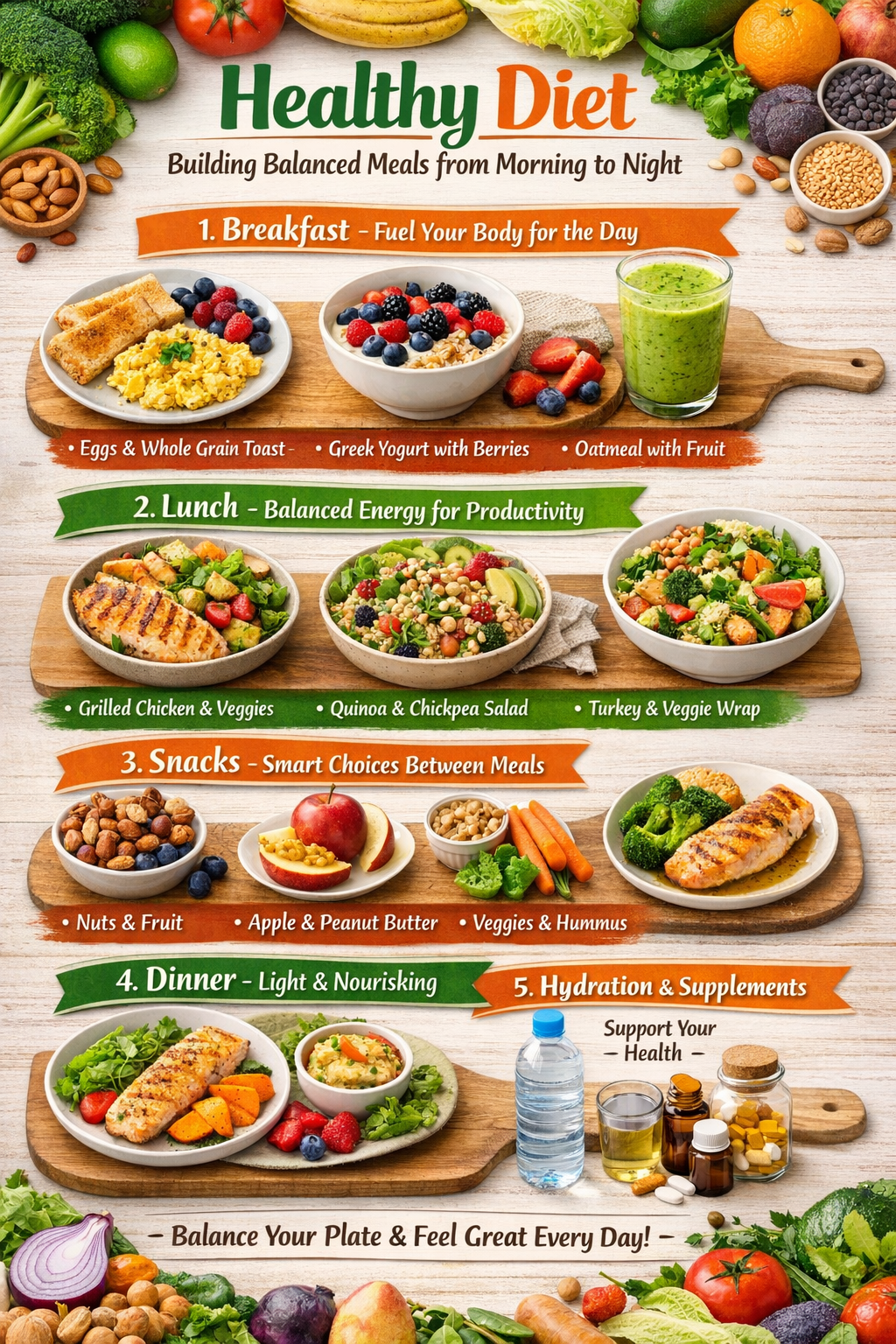
Eating a healthy diet doesn’t mean strict rules or boring food. It’s about balance, consistency, and choosing foods that fuel your body throughout the day. When you structure your meals wisely—starting from breakfast and ending with dinner—you support better energy, digestion, and long-term health.
Let’s break down what a healthy diet looks like across the day, with practical food examples you can actually enjoy.
1. Breakfast: Fuel Your Body for the Day
Breakfast sets the tone for your metabolism and energy levels. Skipping it can lead to cravings, low focus, and overeating later in the day. A healthy breakfast should include protein, complex carbohydrates, and healthy fats.
Healthy Breakfast Examples:
-
Scrambled eggs with whole-grain toast and avocado
-
Greek yogurt topped with berries, nuts, and seeds
-
Oatmeal cooked with milk, chia seeds, and fresh fruit
-
Smoothie made with spinach, banana, protein powder, and almond milk
Why it works:
Protein keeps you full, fiber stabilizes blood sugar, and healthy fats support brain function. Avoid sugary cereals and pastries that cause energy crashes.
2. Lunch: Balanced Energy for Productivity
Lunch should refuel your body without making you sluggish. A good lunch balances lean protein, vegetables, and slow-digesting carbs.
Healthy Lunch Examples:
-
Grilled chicken or tofu with brown rice and roasted vegetables
-
Quinoa salad with chickpeas, cucumber, olive oil, and lemon
-
Whole-grain wrap with turkey, hummus, and fresh veggies
-
Lentil soup with a side salad
Why it works:
Vegetables provide essential vitamins and antioxidants, protein supports muscle and satiety, and whole grains maintain steady energy levels for the rest of the day.
3. Snacks: Smart Choices Between Meals
Snacking isn’t unhealthy—mindless snacking is. Smart snacks prevent overeating at meals and keep blood sugar stable. Aim for protein + fiber.
Healthy Snack Examples:
-
A handful of almonds or walnuts
-
Apple slices with peanut butter
-
Cottage cheese with berries
-
Carrot sticks with hummus
-
A boiled egg
Why it works:
These snacks provide sustained energy and help curb sugar cravings without excess calories.
4. Dinner: Light, Nourishing, and Satisfying
Dinner should be nourishing but not overly heavy, especially if eaten late. Focus on lean protein, vegetables, and lighter carbs.
Healthy Dinner Examples:
-
Baked salmon with steamed broccoli and quinoa
-
Stir-fried vegetables with tofu or shrimp
-
Grilled chicken with sweet potato and salad
-
Vegetable curry with lentils
Why it works:
Lighter meals aid digestion and improve sleep quality. Omega-3 rich fish and vegetables reduce inflammation and support heart health.
5. Hydration and Supplements: Supporting a Healthy Diet
A healthy diet isn’t complete without proper hydration. Drinking enough water helps digestion, nutrient absorption, and energy levels.
Simple Hydration Tips:
-
Drink water throughout the day
-
Include herbal teas
-
Eat water-rich foods like fruits and vegetables
Common Supplements (If Needed):
-
Multivitamins
-
Omega-3 fatty acids
-
Vitamin D
-
Probiotics
Note: Supplements support a healthy diet but never replace real food.